
“If you want to be a leader, you have to make yourself visible”
04/09/2026
Five Questions for Lia Grünhage
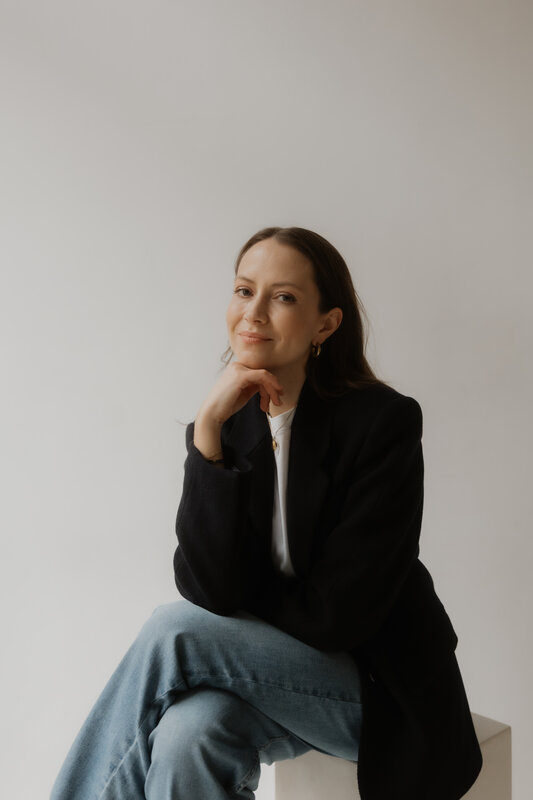
Lia Grünhage (BSc 2011, MSc 2013) had already made up her mind: she did not want to start her own company. But things change, and ever since 2022, the 36-year-old WHU alumna has been able to count herself as an entrepreneur. She is now the co-founder of Ten More In, a leadership platform that helps, prepares, and guides women throughout their careers in leadership positions. In a new interview, Grünhage speaks about her own path and the structural hurdles she encountered along the way and offers concrete tips for women seeking to assume greater responsibility in the workplace.
Lia, you never actually wanted to found a company. How did you end up doing so?
I grew up surrounded by entrepreneurship. My father is his own boss, and I learned at a young age exactly what that entails: freedom, yes—but enormous responsibility as well. A company that’s not operating well will affect not only the bottom line, but people too. And that put me off for a long time. But at WHU, entrepreneurship became more and more visible and normalized. Yet, my first move was to go into consulting, and that’s when I realized that I didn’t want to assist companies from the sidelines; I wanted to help shape them myself. At Amorelie, I experienced for the first time what it means to be responsible for a business on all fronts: strategically, operatively, and culturally. And I realized how much leverage a company truly has: You’re doing more than just making a product; you’re also influencing people’s behavior, the narrative, and, when all is said and done, you’re influencing a part of our society too.
How did that lead to the founding of Ten More In?
In 2022, a photo started circulating in the media. It was of a group of men sat around a table at a CEO lunch at the Munich Security Conference. Lea-Sophie Cramer, who would later become my business partner, and I got to talking, and we asked ourselves: Why is it still the norm that us women are not sitting at that same table?
And we realized there is something that is astonishingly overlooked in Germany: Leadership is not commonly learned in a systematic way. A lot of people assume leadership roles because they’re highly knowledgeable in their fields—and not because they have learned how to be a leader. That overwhelms men as well as women. But women are often under much closer scrutiny and are judged more quickly. As a result, they internalize more self-doubt. Ten More In aims to be the solution to this problem: high-caliber leadership training centering less on “motivation” and more on expanding one’s competencies, self-regulation, and concrete management tools. And that’s not because women are somehow not capable, but rather because they often have to contend with additional obstacles in already existing structures.
Which recurring obstacles do you see women facing on their journey to leadership?
One recurring pattern has to do with visibility. Many women don’t want to assume the responsibility unless they have the feeling they are “perfectly prepared” to do so. The problem is that leadership doesn’t come from perfection, but from one’s ability to make decisions in moments of uncertainty. Sticking your neck out comes with the risk of criticism, but that’s exactly the price you pay when helping to shape something new. When a system considers the mistakes made by men to be indicative of their potential, but considers mistakes made by women evidence of their supposed lack of suitability, then perfectionism is an understandable adaptation strategy. But that renders us invisible, and those who are invisible won’t have any say in decision-making bodies.
I like to use the image of mountain climbing as an example. We cannot wait until we’re sure that we will reach the top. Perhaps we won’t get there, but maybe we’ll leave behind hooks in the rock that will make it easier for the women who come after us.
How do you do that exactly?
We offer structured, multi-week leadership programs. At the heart of our offerings is a digital coaching format that grants participants access to the top figures in their chosen fields—that is, Germany’s best executive coaches who have experience working one-on-one with senior-level managers. We’re making this level of quality scalable.
Another core element for us is our mirror coaching. Aided by curated peer circles, participants attend real, in-person or pre-recorded coaching sessions and reflect on their own situations. The effect is twofold: They learn directly from our high-caliber coaching model and recognize their own patterns in the questions posed by others. And throughout the process, many realize that their uncertainties are not just personal. More often than not, they’re structural, and that leads to clarity and an ability to act.
The content focuses on concrete leadership questions and tools that make a difference in their everyday working life. Rounding out our core program are our reinforcing formats that revolve around, for example, life–work balance or visibility. Those who complete our program also become part of our network, home to over 2,000 women in leadership, with local meetups, events, and an active online community. And that network is no mere “feel-good bonus”; it’s a way to advance in your career, as it allows for new experiences, mutual support, and exchanges on an even playing field.
What role has WHU played in your journey thus far? And what tip would you give to young women studying today?
I met my closest friends at WHU, and I can’t think of anything more valuable than having found people with whom I can go through life.
Beyond that, WHU showed me early on how relevant networks are—and not just because of the old clichés about connections, but because it’s an infrastructure for your development. These are people who will challenge you, recommend you to others, open doors for you, and help support you during those phases when you feel unsure.
My advice to women studying today: Don’t wait for somebody to give you some “official” green light. Assume responsibility in small situations—who’s presenting? Who’s being the moderator? Who’s in charge of the project? Those are training moments for later leadership roles.
Thanks for the chat, and we wish you a lot of success for the future.
You can read other “Five Question for…” interviews here.
Photo credit: Mirjam Hagen