
Artificial intelligence to help tourists more quickly access hotspots and avoid long wait times
12/10/2025
WHU Students Put Skills to the Test and Develop Apps for Koblenz-Touristik
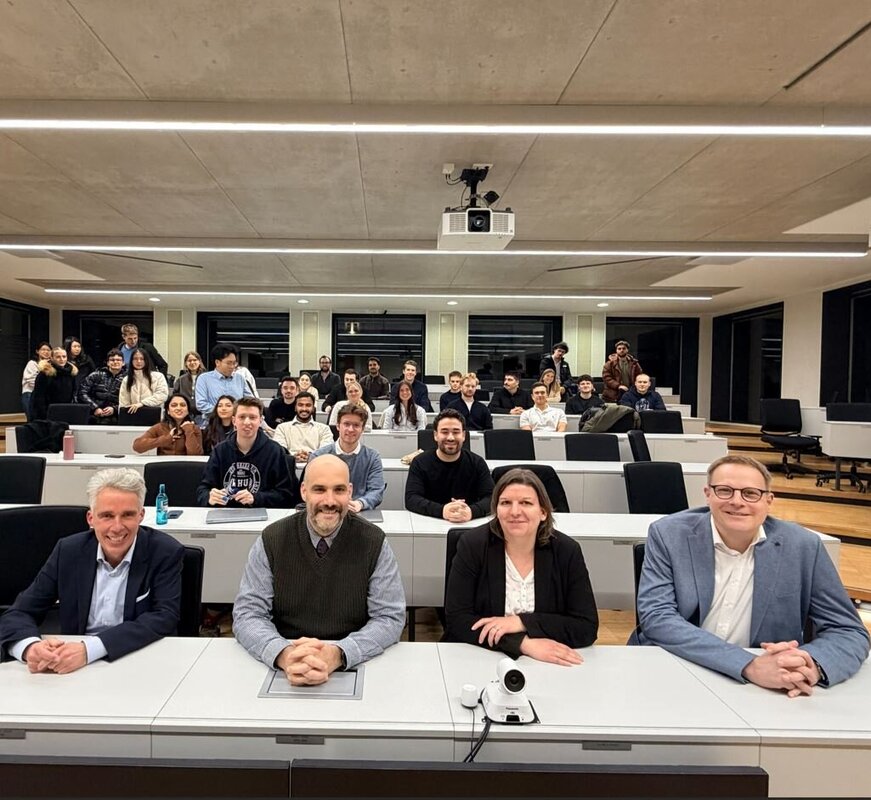
One common criticism many universities face is a perceived lack of focus on generating solutions helpful to today’s businesses—but the same cannot be said of the course jointly led by Professor Stefan Spinler and Professor Arne Strauss at WHU – Otto Beisheim School of Management. Over the course of three weeks, participating Master's students transformed their lecture hall into an incubator for innovation, where they worked together to develop usable solutions to real-world challenges affecting the tourism industry in and around the Koblenz area. With the help of artificial intelligence, they developed applications that, for example, simplify the process for purchasing tickets and making reservations at attractions and restaurants and reduce long wait times. Working on these issues meant the teams of students had to come up with creative ideas, analyze the data, and make use of their programming and AI skills. At the end of the project, they presented their concepts to representatives from tourism organization Koblenz-Touristik.
“We worked closely with the marketing department at Koblenz-Touristik for this year’s GenAI for Business course, and they gave our students real tasks that could be solved through the use of generative AI. That allowed participants to become better acquainted with certain tools, develop prototypes, and come up with solutions that place focus on the customer,” said Professor Spinler. “A big ‘thank you’ goes out to the team at Koblenz-Touristik for their trust in our students’ concepts.”
The course examines how academic expertise and modern technology can have a positive influence on regional development. And students benefit as well, their education in management giving them a chance to act as consultants and work on solutions to real problems. “I’ve learned how to make use of many more AI-based tools and develop fitting processes. For us students who are specializing in economics, the project had incredible technical depth,” said one participant following the final pitch.
The collaboration also opened Koblenz-Touristik to new perspectives. The tourism organization benefited from the creative and analytical strengths of the school’s students and now has new AI-supported methods to work with. “We approached WHU because their students are very intelligent and creative, and we wanted them to help us improve our AI projects,” said Claus Hoffmann, Managing Director of Koblenz-Touristik. The agency will meet with participating students at a subsequent meeting, where they will look into the concepts with the most promise.
WHU has made it its mission to demonstrate both the risks and opportunities that come with the use of AI, thereby helping students recognize, critically assess, and use this new technology in a responsible manner. In March 2025, the school entered into collaboration with OpenAI, becoming the first business school in Germany to do so. The school wants students to avoid having blind faith in the technology, but rather to use it thoughtfully and with a sense of awareness, allowing themselves to develop one of the skillsets most important to today’s working world.