
A reflection on WHU’s startup ecosystem, gender imbalance in venture capital, and why stronger founder support networks matter.
13.05.2026
Why Strong Startup Ecosystems Must Address Gender Gaps
Note: The following contributions are personal impulses from Max Eckel. They represent individual reflections and are intended to stimulate discussion and further thought.
A US startup just gave WHU rare external recognition. And it sparked some discussion in the comments about an important issue... sometimes in not-so-productive language…
Doug Webb from Crustdata (YC F24) recently shared a graphic on WHU founders and the capital their companies have raised. As someone who spends a lot of time trying to make the WHU startup community more visible, I genuinely appreciated it. WHU is still far more under the radar than its entrepreneurial output deserves.
The numbers are impressive: hundreds of founders, billions in funding, companies that shaped entire categories. For a small business school with only around 2,000 students, that is not normal. But the graphic also made something obvious: almost all of the biggest funding names were men. The comment section picked up on it quickly, and honestly, that reaction was fair. You cannot ask people to notice the output and then be surprised when they also notice such patterns.
I don’t think the right response is defensiveness. It is also not useful to pretend this is a WHU-only phenomenon. The startup and VC world has a structural gender gap, and WHU has operated inside that world for decades. But if you are a leading entrepreneurship ecosystem, you inherit the responsibility to ask what you can actively change: Who gets encouraged early? Who sees relatable role models? Who has access to investors?
This is why I am so grateful that Darya Kamkalova is working with us on exist - from science to business Women at WHU. Darya moved to Germany sixteen years ago without knowing words like “startup” or “ecosystem builder.” She studied at WHU, built a career in the corporate world, left after hitting her own ceiling, and then turned her energy toward helping more women enter entrepreneurship with better access, stronger visibility, and less loneliness in the process.
Through Venturing Women, she has been building exactly the kind of infrastructure that ecosystems need but often underestimate: Actual connection between aspiring female founders, experienced entrepreneurs, investors, and people who can open the right doors. For WHU, I also think the answer is to build a better routing layer for the people who have not been pulled into it strongly enough yet.
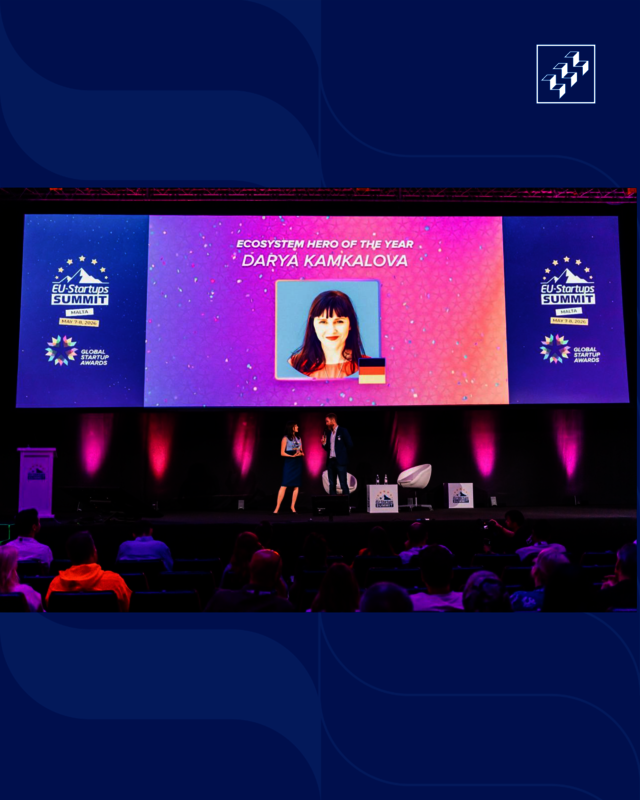
Darya’s work is a serious part of that. And now it has received global recognition: she was selected as Ecosystem Hero of the Year by the Global Startup Awards, from more than 71,000 nominations across 65 countries! That award is hers. Fully deserved.
But it's also a strong signal that, once again, shows how amazing it is to have the best people in their field return to their alma mater and contribute to an even brighter future for the institution. Strong ecosystems do not get weaker by naming their gaps. They get stronger when they build against them.
Huge congratulations, Darya. Very grateful to have you in our corner.